The Analects of Qiao Zhihui
En l'année Yisi, lorsque la fin de l'été n'était point encore achevée, un mémoire urgent arriva à la Cour depuis les marches occidentales. Le sceau en était encore tiède, et les taches de thé y gardaient leur parfum. C'était le mémoire de Mingzheng.
Le mémoire disait : par des paroles douces, il avait ému son supérieur, avancé un mois de solde et déplacé la période de congé, afin que les mineurs pussent rentrer chez eux pour fuir la chaleur. À la reprise du travail, leur ardeur fut plus vive.
L'Empereur le lut et inclina la tête : « Les mots sont proches, l'intention lointaine ; l'acte est modeste, la vertu vaste. »
Peu après, un second rapport arriva : Mingzheng était tombé malade. L'Empereur dépêcha des cavaliers de relais pour le ramener au Pavillon de la Grande Simplicité, et les médecins impériaux veillèrent sur lui jour et nuit.
Certains ministres se demandèrent si tant d'égards n'était point excessif. L'Empereur dit : « Les os loyaux sont difficiles à trouver ; un tel homme vaut mille scribes. »
Durant ses jours de repos dans la maison des champs, les anciens compagnons vinrent rarement. Seul l'Homme à la Langue Aiguë errait là jour et nuit, se retournant avec inquiétude au moindre bruit de feuilles.
L'Empereur l'apprit et rit : « La bouche est mince, le sentiment profond ; le monde le comprend rarement. »
Après dix jours, Mingzheng guérit et demanda à retourner aux marches occidentales. Ceux qui vinrent le reconduire emplirent la route. L'Homme à la Langue Aiguë le suivit en silence jusqu'au Pont du Vent.
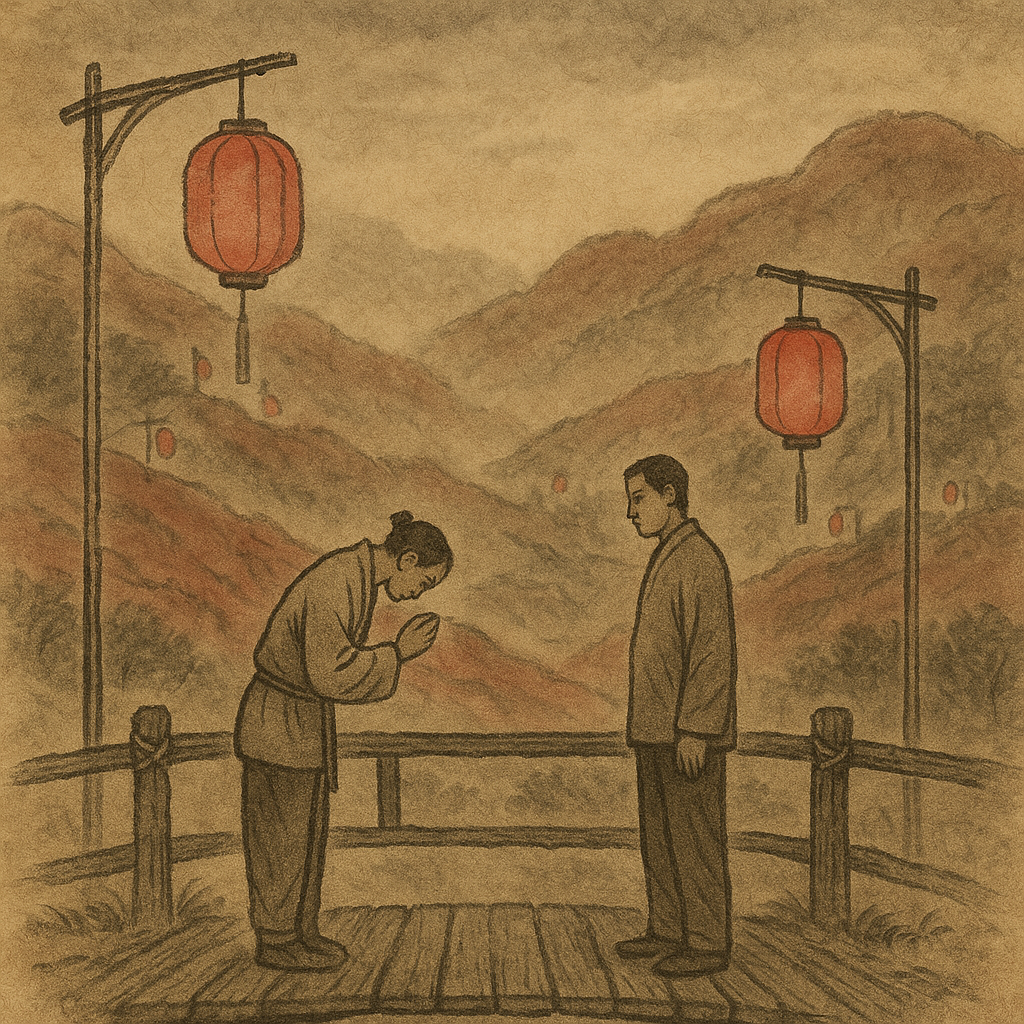
Mingzheng s'inclina une fois depuis son cheval. Les cigales d'automne, à la tête du pont, se turent toutes. Les compagnons ne dirent rien, et pourtant leur affection était profonde.
Lorsqu'il revint à la Crête Rouge, le vent pestilentiel était tel qu'auparavant. Mingzheng commença par effacer les anciens ressentiments, puis remit les registres en ordre, et présenta de nouveau un mémoire sur le déplacement des congés et l'avance des soldes. Dans la vallée, les voix de joie montèrent comme une marée.
Lorsque le mémoire atteignit l'Orient, l'Empereur dit : « Voici le dernier trait, et aussi le plus lourd. »
岁在乙巳,季夏未央,西陲急奏抵阙,封尚温,茶痕犹香,乃明政疏也。
疏曰:以柔言动上官,预支月俸,迁假期,使矿丁归家避暑,复工益精。
帝览而颔首:“言近志远,行寡德宏。”
未几,再报明政染疠。帝遣驿骑迎归太素堂,太医昼夜护诊。
群臣疑礼过隆,帝曰:“忠骨难觅,一人抵千吏。”
静养郊舍日,旧侣罕至,独尖言者昼夜徘徊,木叶有声即惊回首。
帝闻而笑:“口薄情厚,世罕察之。”
十日痊愈,明政请复西陲。送者盈道,尖言者默随至风桥。
明政策马一揖,桥头秋蝉俱噤,同行不语而情深。
再抵赤岭,瘴风如昔。明政首除宿怨,复整账簿,又奏迁假与预俸,谷中欢声如潮。
奏章东达,帝曰:“此最后一笔,亦最重一笔。”
In the year Yisi, while late summer had not yet ended, an urgent memorial arrived at court from the western marches. Its seal was still warm, and the stains of tea yet fragrant. It was Mingzheng's memorial.
The memorial said: by gentle words he had moved his superior, advanced a month's wages, and shifted the leave period, so that the miners might return home to escape the heat. When work resumed, their efforts were sharper.
The Emperor read it and nodded: "The words are near, the intention far; the deed is small, the virtue broad."
Not long thereafter, a second report came: Mingzheng had fallen ill. The Emperor dispatched relay riders to bring him back to the Hall of Great Plainness, and the imperial physicians tended him day and night.
Some ministers wondered whether the ceremony was excessive. The Emperor said: "Loyal bones are hard to find; one such man is worth a thousand clerks."
During the days of his rest in the country house, old companions seldom came. Only the Sharp-Tongued One paced there day and night, turning back in alarm whenever the leaves made sound.
The Emperor heard of this and laughed: "The mouth is thin, the feeling thick; the world seldom understands this."
After ten days, Mingzheng recovered and requested leave to return to the western marches. Those who came to see him off filled the road. The Sharp-Tongued One followed silently as far as Wind Bridge.
Mingzheng bowed once from horseback. The autumn cicadas at the bridge fell silent. The companions said nothing, yet the feeling between them was deep.
When he arrived again at Red Ridge, the miasmic wind was as before. Mingzheng first removed old resentments, then set the account books in order, and again memorialised on shifting leave and advancing wages. In the valley, joyful voices rose like a tide.
When the memorial reached the East, the Emperor said: "This is the final stroke, and also the heaviest."
Mingzheng ne fut point troublé par la maladie, ni aigri par le voyage. Revenu à sa charge, il mesura d'abord les coeurs des hommes, et seulement ensuite le cuivre et les comptes. Ses paroles furent rares et son action exacte ; ainsi un seul mémoire apaisa la frontière, et un seul salut dénoua une vieille affection.
明政病不扰,旅不怨,复任先度人心,后度铜两;少言而事核,故能一疏慰边陲,一揖解尘怀。
Mingzheng was not disturbed by illness, nor resentful in travel. Returning to office, he first measured the hearts of men, and only afterward copper and accounts. His words were few and his work exact; therefore one memorial comforted the frontier, and one bow untied old feeling.
« Loyal sans tapage, humain et capable de traduire ; la parole mordante est liée à un sentiment profond. L'amitié des hommes de bien est simple, et pourtant s'épaissit avec le temps. »
“忠而不噪,仁而能译;讥言系深情,君子交淡而弥厚。”
"Loyal without noise, humane and able to translate; sharp speech is tied to deep feeling. The friendship of gentlemen is plain, yet grows thicker with time."
La chaude pestilence avait longtemps pénétré la chair ;
Revenu au palais, il reposa quelque temps.
Au Pont du Vent, pas un mot ne fut prononcé,
Pourtant dix mille couches de sentiment y pesaient.
Après l'ajustement des soldes à la Crête Rouge,
La lampe et les étoiles brillèrent loin dans la nuit.
热瘴侵肌久,归阙暂安身。
风桥无一语,却重万重心。
赤岭调薪后,灯星照夜深。
Hot miasma long had entered the flesh;
Returning to the palace, he rested a while.
At Wind Bridge not one word was spoken,
Yet ten thousand layers of feeling were heavy there.
After wages were set at Red Ridge,
Lamplight and stars shone deep into night.
Ce livre se clôt par l'apaisement du peuple. Il montre le bien accompli à travers l'épreuve, cache le sentiment au Pont du Vent et manifeste le mérite à la Crête Rouge, afin que l'homme entier demeure préservé.
:以抚民终篇,显历难而成善;隐情于风桥,彰功于赤岭,俾全其人。
This book closes with the pacifying of the people. It shows goodness completed through hardship, conceals feeling at Wind Bridge, and displays merit at Red Ridge, so that the whole person may remain intact.